 Activix
  AutoTrader
  Black Book
  CarGurus
  Equifax
  TransUnion



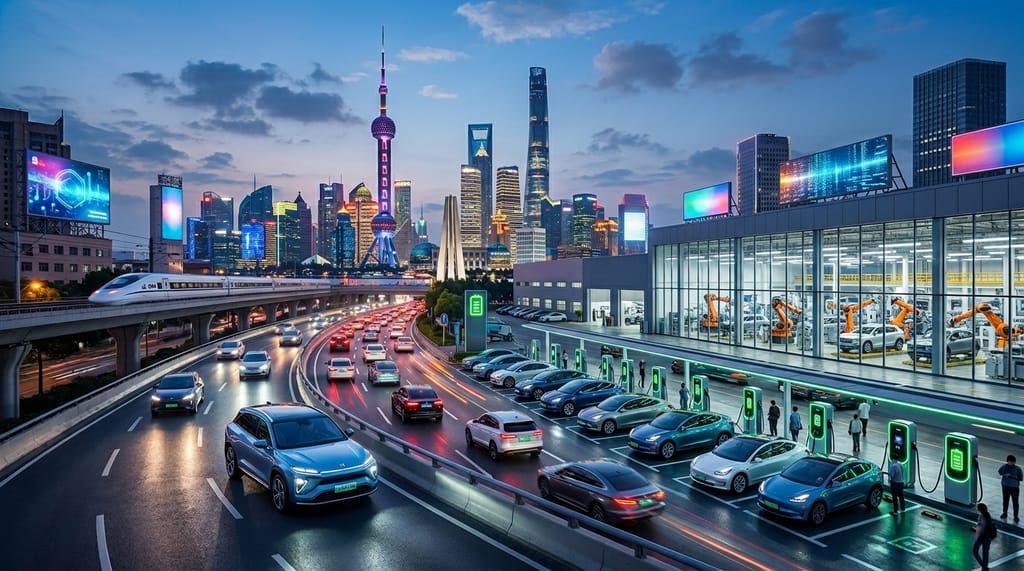
For decades, the global automotive industry was largely shaped by North American, Japanese, and European manufacturers. Today, that landscape is changing rapidly.
China is now the world's largest automotive market, the largest vehicle exporter, and the dominant force in electric vehicle (EV) production. As Chinese automakers continue expanding globally, their influence is increasingly being felt across Canada and the United States.
Understanding the relationship between China and the automotive industry is becoming essential for dealers, manufacturers, and consumers alike.
Key Takeaways
If you're trying to understand China and the automotive industry in 2026, these are the most important points:
- China is now the world's largest EV producer and exporter.
- Chinese automakers are expanding their global footprint rapidly.
- Battery production and EV technology remain major competitive advantages.
- Canada and the U.S. are investing heavily in domestic automotive and battery manufacturing.
- Trade policies and tariffs will continue shaping how Chinese vehicles impact the North American market.
- Dealerships should monitor these trends closely as consumer expectations and vehicle technology continue evolving.
How China Became an Automotive Superpower
China's rise in the automotive sector did not happen overnight.
Over the past two decades, the Chinese government invested heavily in vehicle manufacturing, battery technology, and EV development. These investments helped Chinese automakers scale production, lower costs, and compete internationally.
Today, China produces roughly 70% of the world's electric vehicles and remains the largest EV manufacturing hub globally. Chinese automakers are also exporting millions of vehicles annually to markets around the world.
Companies such as BYD, Geely, Chery, SAIC, and others have grown from regional brands into global competitors.
Why China's Automotive Industry Matters to Canada and the U.S.
For North America, the impact of China's automotive growth extends beyond vehicle sales.
Three major areas are driving attention:
1. Increased Competition
Chinese manufacturers have become known for producing technology-rich vehicles at significantly lower price points than many Western competitors.
In the EV segment especially, Chinese brands have gained a reputation for offering advanced battery technology, modern infotainment systems, and competitive driving ranges at lower costs. This has created pressure on traditional automakers in North America to accelerate innovation while controlling costs.
2. Supply Chain Influence
China plays a major role in the global battery supply chain.
Many of the materials and components used in electric vehicles, including battery cells and battery materials, are manufactured or processed in China. As North American automakers invest billions in EV production, they continue working to diversify supply chains and reduce dependence on overseas suppliers.
3. Trade and Tariff Policy
Automotive trade has become increasingly tied to geopolitics.
Governments in Canada and the United States have introduced various measures designed to protect domestic manufacturing and encourage local investment. Tariffs, production incentives, and domestic content requirements have all become major topics of discussion as policymakers balance consumer affordability with industrial competitiveness.
Datos de crédito, intercambio e identidad en cada prospecto, dentro de su CRM. Haga el recorrido.
Reservar una demo →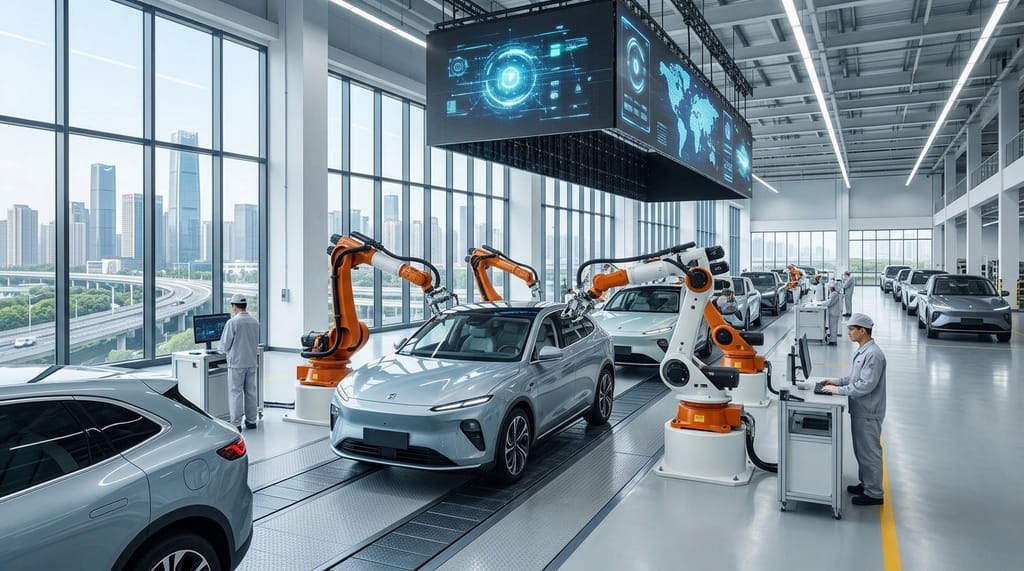
The EV Factor
When discussing China and the car industry, it is impossible to ignore electric vehicles.
China recognized the EV opportunity earlier than many Western markets and invested heavily in battery production, charging infrastructure, and EV manufacturing capacity.
The result is a market where EV adoption has accelerated rapidly and manufacturers have gained significant production experience. Chinese automakers now account for a large share of global EV exports, and many industry analysts expect their international presence to continue growing throughout the decade.
For North American automakers, this creates both a challenge and an opportunity:
- Increased pressure to improve EV affordability
- Greater focus on battery innovation
- More investment in domestic manufacturing
- Faster development of new vehicle technologies
What This Means for Canadian Dealerships
For dealerships in Canada, China's growing influence may affect the market in several ways.
More Consumer Awareness
Canadian consumers are becoming increasingly aware of emerging automotive brands and EV options available globally.
Even when certain brands are not directly available in Canada, their pricing and technology often influence consumer expectations.
Greater Focus on Affordability
Vehicle affordability remains one of the biggest challenges facing the industry.
As Chinese manufacturers continue producing lower-cost EVs and hybrids, North American manufacturers may face additional pressure to deliver more affordable alternatives.
Ongoing Industry Change
Dealerships are already adapting to major shifts involving electrification, digital retailing, and changing consumer preferences. China's automotive growth adds another layer to an industry that is evolving faster than ever.
Final Thoughts
China's influence on the global automotive industry is no longer a future possibility. It is already happening.
Whether through electric vehicle innovation, battery manufacturing, supply chains, or global exports, China's role in the automotive sector continues to grow.
For Canada and the United States, the challenge is not simply competing with Chinese manufacturers. It is adapting to a rapidly changing market where technology, affordability, and electrification are becoming the defining factors of automotive success.
Dealerships, manufacturers, and consumers who understand these trends will be better positioned to navigate the next chapter of the automotive industry.