 Activix
 AutoTrader
 Black Book
 CarGurus
 Equifax
 TransUnion


Ask how to get better leads and most advice comes back with a list of channels: more marketplaces, more paid social, more landing pages. That gets you more leads. It rarely gets you better ones.
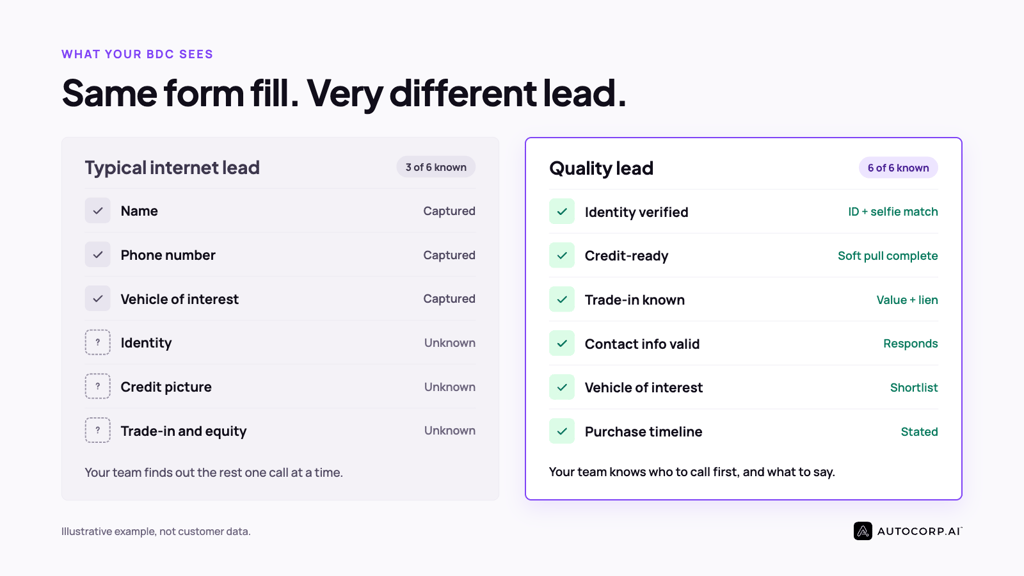
Your BDC doesn’t have a volume problem. It has a “who is this, and can they actually buy?” problem. Every lead arrives looking the same: a name, a phone number, and a vehicle of interest. Your team finds out the rest one call at a time.
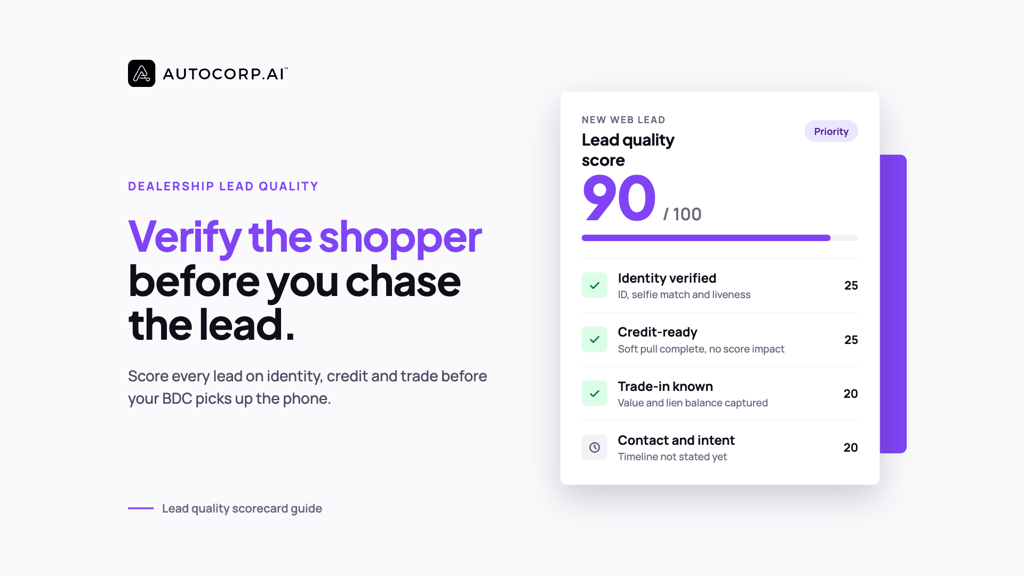
This guide treats lead quality as something you can measure before anyone picks up the phone. That means three checkpoints: identity verified, credit-ready, and trade-in known. You’ll also get an example scorecard you can adapt to your store.
What makes a dealership lead high quality?
A high-quality lead is a real, reachable person whose identity, buying ability, and deal situation you understand before the first conversation.
That breaks down into three core checkpoints:
- Identity verified. You know the shopper is who they say they are. Their government ID has been checked and matched to them, not just typed into a form.
- Credit-ready. The shopper has consented to a soft credit check, so you have a picture of their credit profile before you talk payments.
- Trade-in known. You know whether there’s a trade, what it’s worth, and whether there’s a lien or negative equity attached to it.
Then there are supporting signals that still matter: a working phone number and email, a specific vehicle of interest, and a stated purchase timeline.
Compare that to a typical internet lead. Most give you contact details and a VIN, and nothing about whether the deal can come together. Quality isn’t about how the lead arrived. It’s about how much you know when it does.
Why do more leads often mean worse results for your BDC?
More leads feels like progress. But when you add volume without a filter, a few things happen:
- Call time gets spread thin. Your BDC has a fixed number of hours. Every unreachable number, fake name, or casual browser takes a slot a real buyer could have had.
- Response time slows down. When the queue grows, the shopper who’s ready to buy today waits behind 40 who aren’t.
- Every lead gets the same treatment. Without context, a prime buyer with positive equity gets the same script as someone who filled out a form by accident.
- Problems surface late. The credit doesn’t fit the vehicle. The trade is underwater. The ID doesn’t match. You learn this at the desk or in F&I, after hours of work have gone into the deal.
- Reporting rewards the wrong thing. Cost per lead looks great while cost per sale quietly climbs.
The fix isn’t cutting channels. It’s adding a qualification step between the form fill and the first call.
How do you score lead quality before anyone picks up the phone?
A lead quality scorecard gives your team a shared, consistent way to rank leads the moment they come in. Here’s an example you can adapt.
Example only: The template below is illustrative. The fields and point values are a starting point, not customer data or a benchmark. Weight them based on your store, your lenders, and your inventory.
| Field | What to check | Example points |
|---|---|---|
| Identity verified | Government ID captured, selfie matched to ID, liveness check passed | 25 |
| Credit snapshot completed | Shopper consented and the soft pull came back | 25 |
| Trade-in captured | Year, make, model, and kilometres provided | 10 |
| Trade equity known | Estimated value compared to lien balance | 10 |
| Contact info valid | Phone and email work, and the shopper responds | 10 |
| Specific vehicle of interest | A unit or a clear shortlist, not “anything” | 10 |
| Purchase timeline stated | Shopper has shared when they plan to buy | 10 |
| Total | 100 |
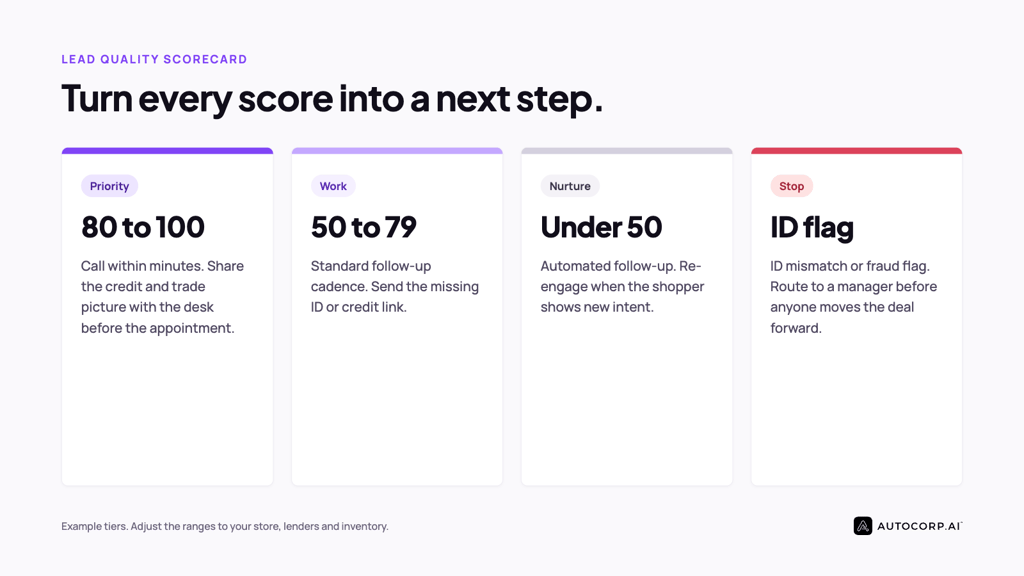
Then turn the score into action:
- 80 to 100: Priority. Call within minutes. Share the credit and trade picture with the desk before the appointment.
- 50 to 79: Work. Use your standard follow-up cadence and invite the shopper to complete the missing step, like sending an ID or credit link.
- Under 50: Nurture. Move to automated follow-up and re-engage when they show new intent.
- ID mismatch or fraud flag: Stop. Route to a manager before anyone moves the deal forward.
One important note on credit: Notice the scorecard rewards being credit-ready, not having good credit. A subprime shopper with a completed soft pull is a real, workable lead. Their credit tier should decide who handles the lead and which vehicles to show, not whether they get called.
To make the scorecard stick:
- Score at the point of capture, not after the first call.
- Store the score and its fields in your CRM so everyone sees the same thing.
- Give one person ownership of the scorecard and review it monthly.
How does ID verification filter out fake and fraudulent leads?
Bad leads come in two flavours. Some are just junk: typos, fake names, test submissions, or people who never meant to buy. Others are deliberate fraud, and that’s the more expensive problem.
In Canada, the industry is paying close attention. A report released by the Canadian Finance & Leasing Association (CFLA), Fraudulent Financing and Illegal Vehicle Exports, found a 72 percent year-over-year increase in fraudulently financed vehicles headed for export (Autosphere). And according to reporting on the Canadian Automobile Dealers Association’s response, criminals often use stolen or synthetic identities to finance vehicles through normal retail and lending channels, and the fraud can go unnoticed until payments stop or the real person discovers the account (Canadian Auto Dealer). autospherecanadianautodealer
That’s why verifying identity early matters. Typical ID verification checks include:
- Document check: Is the government ID genuine and unexpired?
- Face match: Does the person’s selfie match the photo on the ID?
- Liveness: Is a real person taking that selfie in real time, not holding up a photo?
When you verify at the lead stage, you confirm you’re talking to a real person before your team invests time. You also catch mismatches before a deal is structured or a vehicle leaves the lot, and you create a record you can share with your lender.
ID verification reduces risk. It doesn’t eliminate it. Pair it with a process: train your team on common red flags (pressure to rush, mismatched addresses, reluctance to come in) and make it clear who to escalate to.
AVA® tells you who's ready to buy before your team lifts a finger. See the workflow.
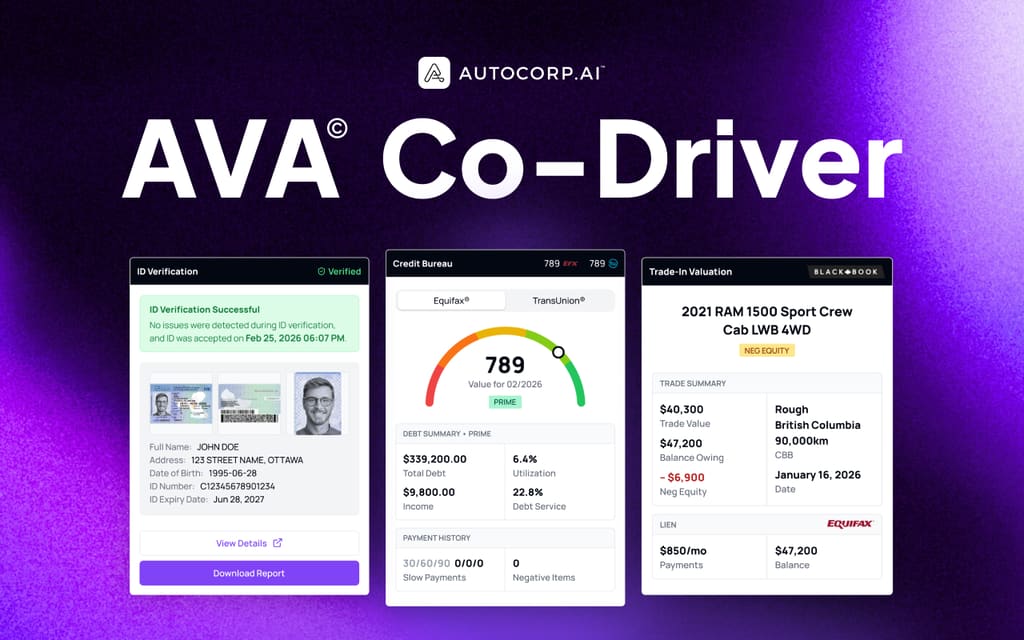
Book a demo →Where AVA® fits: AVA® Verified ID + Credit checks a shopper’s government ID, matches it to a biometric selfie, and adds a fraud score alongside their credit profile, packaged into a lender-ready report. ID verification is included in every AVA® package.
How does early credit insight help you prioritize real buyers?
Credit usually shows up last in the sales process. By the time the desk sees it, the customer has picked a vehicle, the salesperson has talked payments, and expectations are set. If the credit doesn’t support the deal, everyone starts over.
Moving credit to the front of the process changes four things:
- Prioritization. Your BDC knows who’s ready to move and calls them first.
- Routing. Prime leads can go straight to sales, while subprime leads go to a finance specialist from day one.
- The first conversation. Your team can talk about vehicles and payments that actually fit, instead of guessing.
- Fewer desk surprises. The deal you pencil is closer to the deal the lender will see.
A soft pull with the shopper’s consent makes this possible without affecting their credit score. Keep in mind that a credit snapshot isn’t an approval. Lenders make the final call, and their criteria vary.
Add the trade, and the picture is complete. Negative equity is one of the most common reasons deals fall apart late. Knowing the trade value and lien balance up front means your desk can plan around it instead of discovering it.
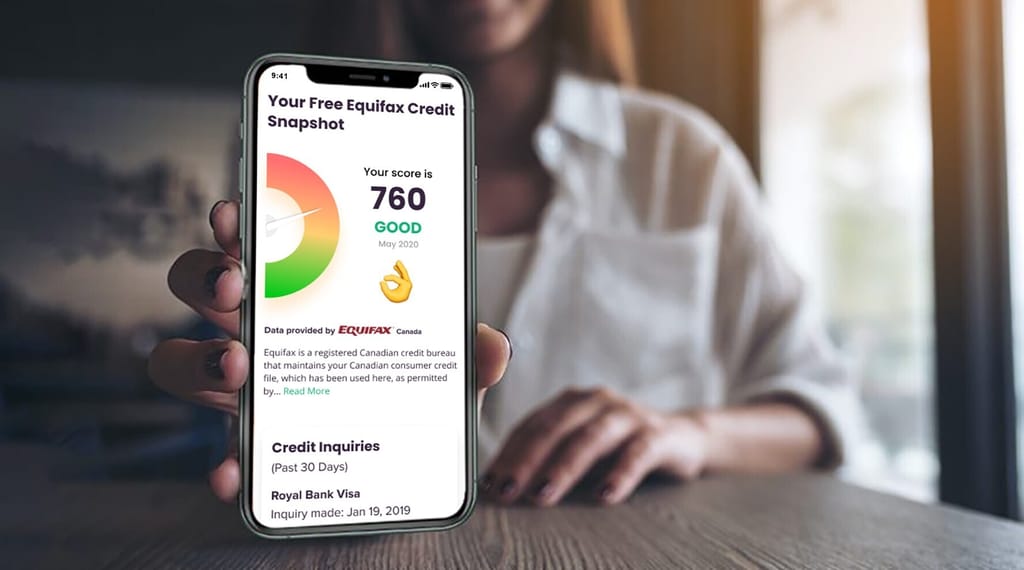
Where AVA® fits: AVA® Credit runs an Equifax soft pull the moment a shopper engages, with no impact on their credit score, and delivers the profile to your CRM. AVA® Trade adds a Canadian Black Book valuation with lien balance and equity during the same lead flow. With the AVA® Portal, Credit, ID, and Trade come together in one workflow: the shopper completes it once, and your team gets one complete profile.
How do you measure lead quality month over month?
A scorecard is only useful if you track what it tells you. Review these metrics every month, broken out by lead source:
- Verified lead rate: The share of leads that completed ID verification.
- Credit-ready rate: The share of leads with a completed soft pull.
- Trade capture rate: The share of leads with a known trade value and lien position.
- Appointment and show rate by score tier: Are priority leads actually booking and showing up?
- Close rate by tier and by source: Which channels produce buyers, not just form fills?
- Cost per qualified lead by source: Total spend divided by leads that hit your quality threshold.
- Fraud and ID flags caught: How many problems did you stop before the desk?
- Speed to first contact for priority leads: Your best leads should get your fastest response.
Then act on it. Shift budget toward sources that produce qualified leads, fix or drop the ones that don’t, and adjust your scorecard weights if a field isn’t predicting outcomes at your store. Over a few months, you’ll know which leads close at your dealership, not just which ones arrive.
Frequently Asked Questions
How do I get better quality leads for my dealership?
Qualify leads when they come in, not after the first call. Verify the shopper’s identity, run a soft credit check with their consent, and capture their trade-in details before your BDC reaches out. Then score every lead the same way.
What is a high-quality lead for a car dealership?
A real, reachable shopper whose identity, credit profile, and trade-in situation you know before the first conversation. Contact details tell you someone filled out a form. Verified ID, credit readiness, and a known trade tell you whether a deal can come together.
Why are so many of my dealership’s internet leads poor quality?
Most lead forms only collect contact details, so fake submissions, casual browsers, and shoppers whose deal can’t come together all look the same. Adding identity, credit, and trade steps sorts them before your team starts calling.
Will asking for ID and credit up front scare shoppers away?
Some shoppers will skip the extra step, but the ones who finish it are showing you they’re serious. Explain that a soft check won’t affect their credit score and helps them see payments that actually fit.
Does a soft credit check affect the customer’s credit score?
No. A soft inquiry doesn’t affect a credit score, unlike the hard inquiry lenders typically run when someone formally applies for financing. A soft-pull snapshot also isn’t an approval. Lenders make that call.
Better leads start after the form fill
You can’t control every shopper who fills out a form. You can control what you know about them before your team calls. Verify who they are, understand their credit, know their trade, and score every lead the same way. That’s how you turn lead volume into lead quality.
See how AVA® verifies and qualifies leads before your team spends time on them. Book a demo.