 Activix
 AutoTrader
 Black Book
 CarGurus
 Equifax
 TransUnion

Most dealerships don’t need more leads. They need more leads worth calling.
When every lead arrives as a name, a phone number, and a vehicle of interest, your BDC has no way to tell a ready buyer from a casual browser. So they call everyone, in the order leads came in, and hope.
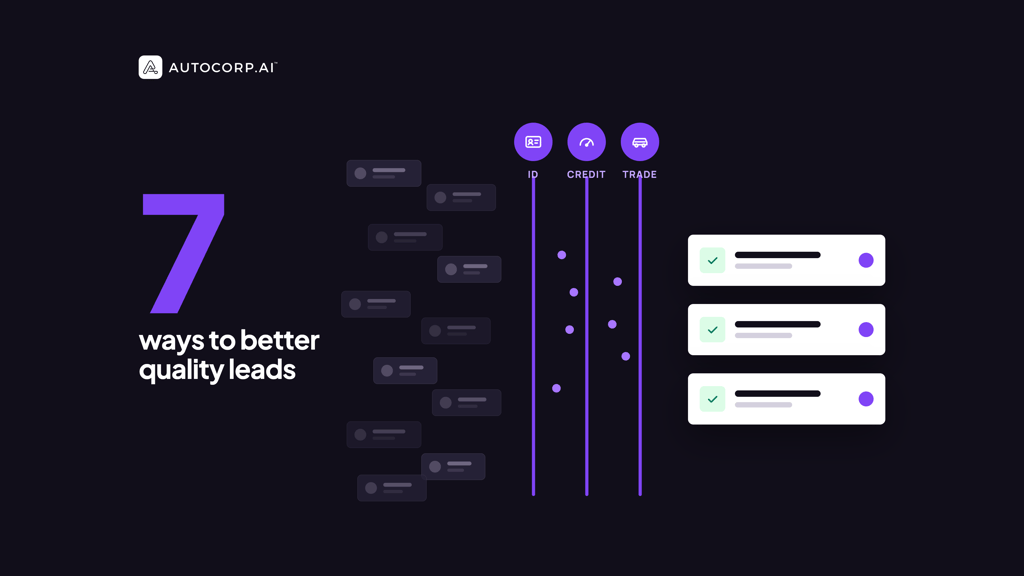
Here are seven practical ways to raise lead quality, plus a breakdown of the tools that help qualify shoppers before your team picks up the phone. If you want the deeper framework, including a full lead quality scorecard, read our guide on how to get better quality leads by verifying the shopper first.
1. Define what a qualified lead means at your store
You can’t improve lead quality until everyone agrees on what it is. Sales, BDC, finance, and marketing often use the word “qualified” to mean four different things.
Write down a standard your whole team can see. A strong starting point is three checkpoints:
- Identity verified: You know the shopper is who they say they are.
- Credit-ready: You have a soft-pull credit picture, with their consent.
- Trade-in known: You know the trade’s value and what’s owed on it.
Then add the basics: working contact info, a specific vehicle of interest, and a purchase timeline. Once this is written down, every other step on this list has a target.
2. Add a soft-pull credit step to your lead forms
A standard lead form collects contact details and stops. Adding a soft credit check turns a form fill into a lead with real context.
A soft inquiry doesn’t affect the shopper’s credit score, so it can happen early in the process without hurting the customer. Your team gets a credit picture before the first conversation, which means they can:
- Call ready buyers first.
- Talk about vehicles and payments that actually fit.
- Send subprime shoppers to a finance specialist from the start.
Keep in mind that a credit snapshot isn’t a financing approval. Lenders still make that decision.
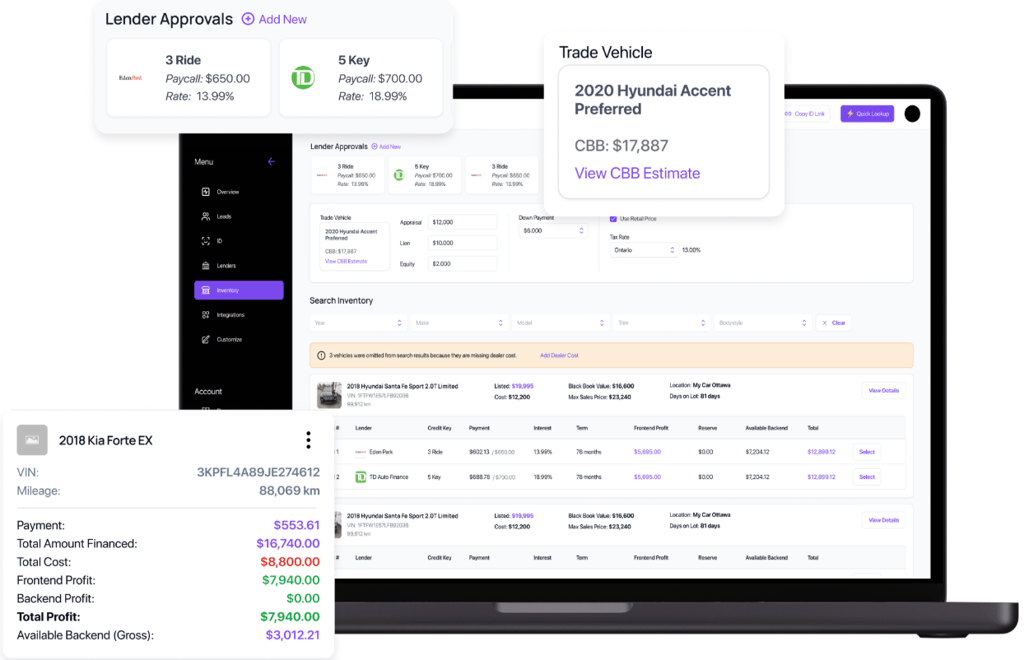
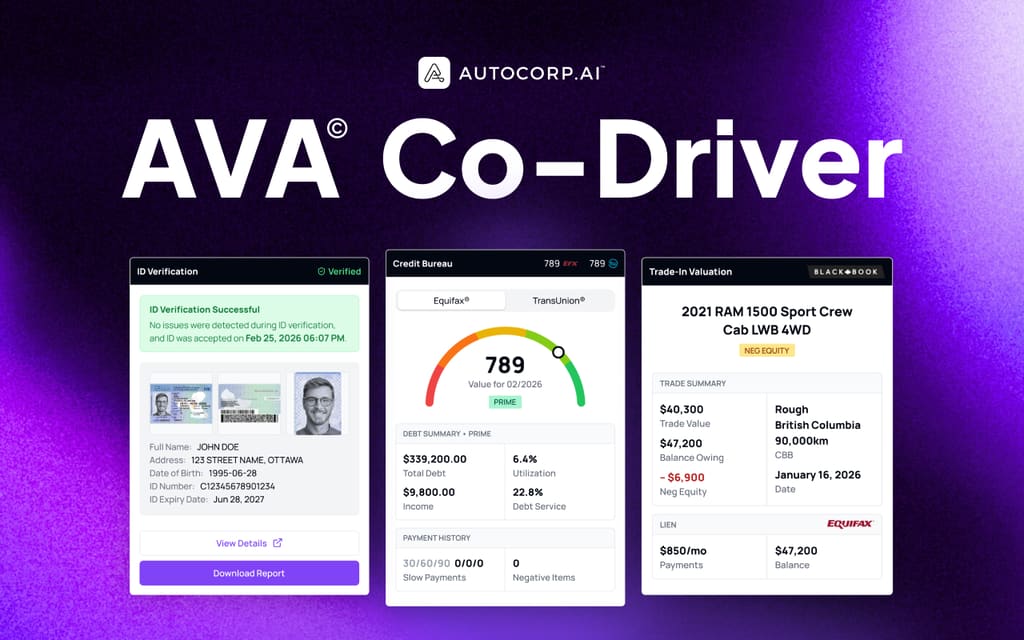
Where AVA® fits: AVA® Credit adds an Equifax soft pull to your website forms with no impact on the shopper’s credit score, and delivers the profile to your CRM. QR codes extend the same flow to your showroom and lot.
3. Verify identity before the appointment
Fake names, mistyped numbers, and fraudulent applications all start as ordinary-looking leads. Verifying identity early tells you you’re dealing with a real person before your team invests hours in the deal.
Look for a verification step that checks three things:
- The government ID is genuine and unexpired.
- The shopper’s selfie matches the photo on the ID.
- A live person is taking the selfie in real time.
Identity verification reduces risk. It doesn’t eliminate it, so pair it with staff training on common red flags and a clear escalation path.
Where AVA® fits: AVA® Verified ID + Credit combines government ID checks, a biometric selfie match, and a fraud score with the credit profile in one lender-ready report.
4. Capture the trade-in up front
Negative equity is one of the most common reasons deals fall apart at the desk. The customer was excited, the numbers looked fine, and then the payoff came in higher than anyone expected.
Asking about the trade during the lead flow fixes that. When you know the vehicle, its estimated value, and the lien balance before the appointment, your desk can plan the deal around the real numbers.
Where AVA® fits: AVA® Trade generates a Canadian Black Book valuation with equity, lien balance, and payoff during the lead flow, so the numbers are ready before your desk structures a deal.
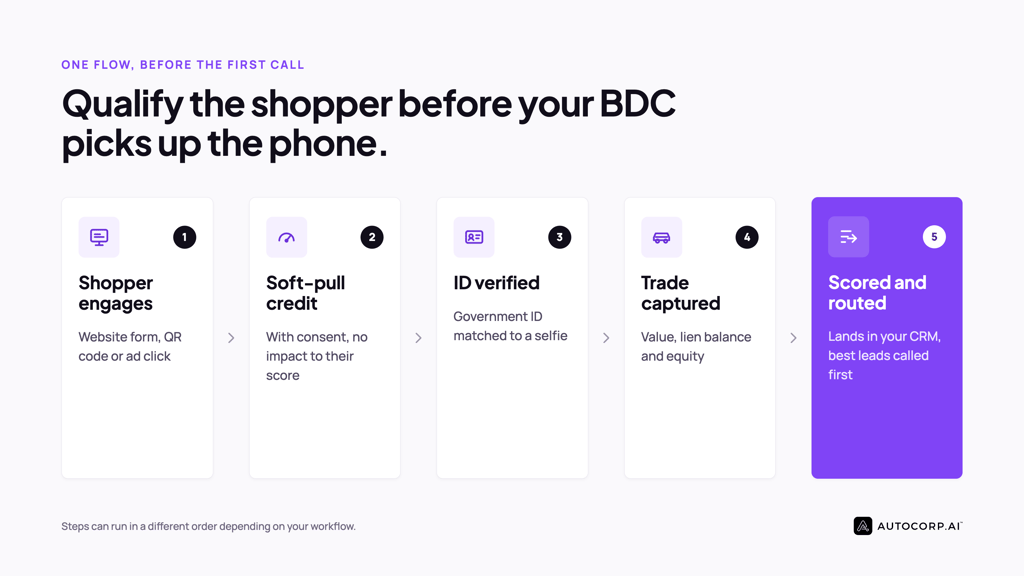
5. Score and route every lead in your CRM
Qualification data is only useful if it changes what your team does next. That’s where scoring and routing come in.
Give every lead a score based on your checkpoints, then set clear rules for each tier:
- Top tier: Call within minutes and brief the desk before the appointment.
- Middle tier: Use your standard cadence and invite the shopper to finish the missing step.
- Low tier: Move to automated follow-up.
- ID flag: Route to a manager before anything else happens.
Route by credit tier too. A subprime shopper with a completed soft pull is a real buyer who should go to the person best equipped to help them.
AVA® pulls soft-inquiry credit and full bureaus before F&I, so deals get structured to fund. Take the tour.
Book a demo →Where AVA® fits: AVA® connects to your CRM with routing rules, so prime and subprime leads reach the right person from day one. AVA® Co-Driver brings credit, trade, and ID details into supported CRM and desking tools. Check the integrations page for current systems.
6. Re-qualify the leads you already have
Your CRM is full of shoppers who weren’t ready six months ago. Some of them are ready now, and they already know your dealership.
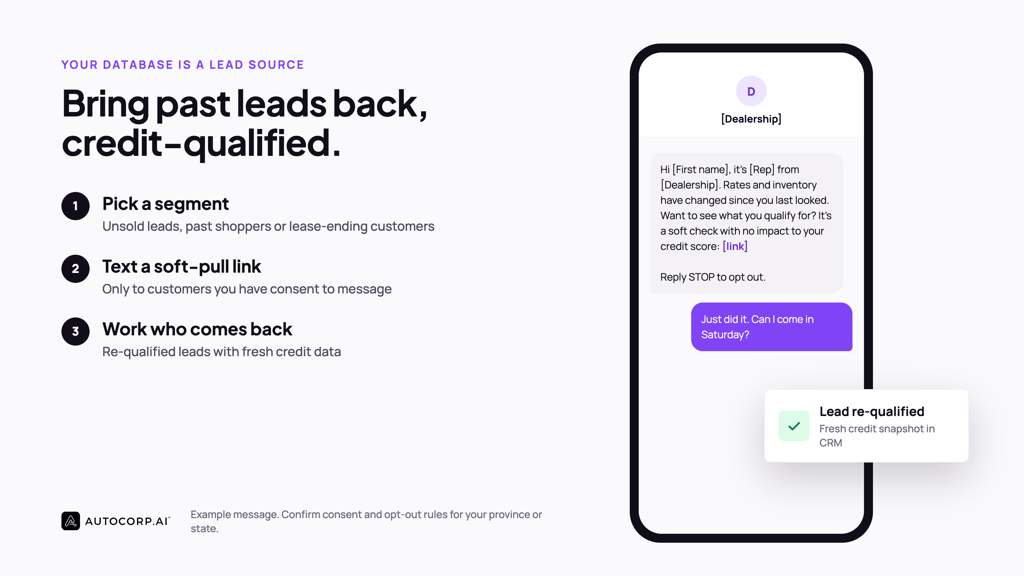
Instead of buying new leads, text a segment of your existing database a soft-pull credit link. Good segments to start with:
- Unsold leads from the last 6 to 12 months.
- Customers with leases ending soon.
- Past buyers who may be in positive equity.
Only message customers you have appropriate consent to contact, make opting out easy, and honour every opt-out request. Consent and messaging rules differ between Canada and the U.S., so confirm your process with your compliance team.
Where AVA® fits: AVA® SMS Automations sends your database a soft-pull credit link with automated follow-up, so dormant leads come back with fresh credit data.
7. Measure cost per qualified lead, not cost per lead
Cost per lead rewards volume. A cheap source that sends 500 unreachable leads looks better on paper than a pricier source that sends 50 real buyers.
Track these metrics by source every month instead:
- Share of leads that are ID-verified, credit-ready, and trade-known.
- Appointment, show, and close rate.
- Cost per qualified lead (spend divided by leads that meet your standard).
- Cost per sale.
Then move budget toward the sources that produce sold vehicles, not just form fills.
Where AVA® fits: AVA® attribution reporting traces deals back to their source, with ROI by channel, campaign, and rep. Learn more on the Leadership solutions page.
What are the best tools for qualifying leads in automotive sales?
There’s no single tool that qualifies a lead on its own. The best setup is a small stack where each tool answers one question about the shopper.
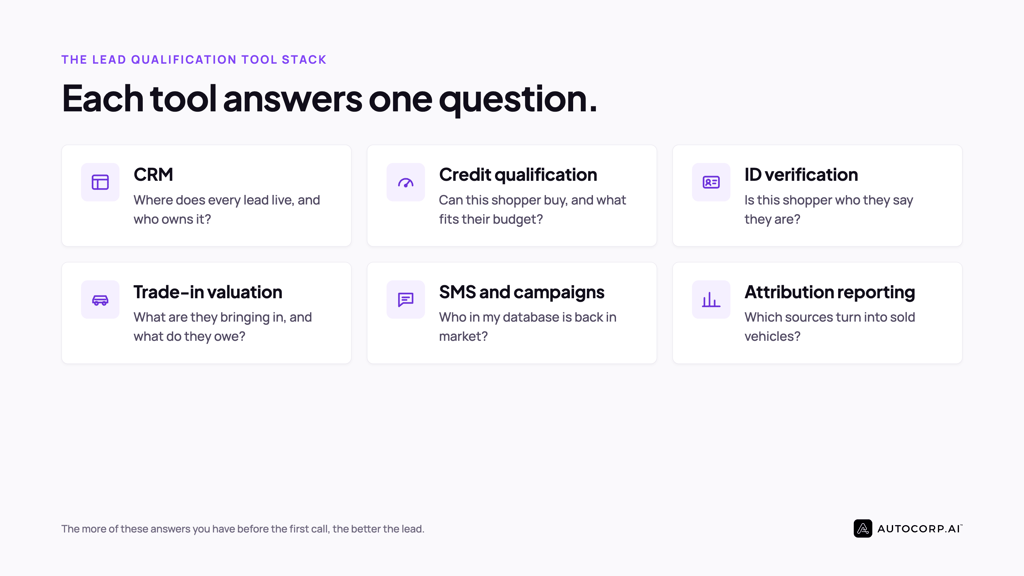
Here’s what each category does, and what to look for:
- CRM: Where every lead lives and who owns it. Look for scoring fields, routing rules, and integrations with your other tools.
- Credit qualification: Whether a shopper can buy and what fits their budget. Look for a consent-based soft pull with no impact on the shopper’s credit score, and results that land in your CRM.
- ID verification: Whether the shopper is who they say they are. Look for document checks, selfie matching, liveness detection, and reports your lenders accept.
- Trade-in valuation: What the shopper is bringing and what they owe. Look for a recognized valuation source plus lien and equity details.
- SMS and campaigns: Who in your database is back in market. Look for consent management, opt-out handling, and links that qualify shoppers when they respond.
- Attribution reporting: Which sources turn into sold vehicles. Look for reporting that connects a lead’s source to the final deal.
The more of these questions you can answer before the first call, the better your leads. Autocorp.ai’s AVA® platform brings credit qualification, ID verification, trade-in valuation, SMS campaigns, and attribution into one workflow that connects to supported CRMs, so your team isn’t jumping between tools to build a picture of the shopper.
Frequently asked questions
What’s the fastest way to improve dealership lead quality?
Add a qualification step to the lead forms you already have. A consent-based soft credit check and a trade-in question give your BDC real context on every new lead, without changing your traffic sources.
What tools do dealerships use to qualify leads?
Most dealerships combine a CRM with credit qualification, ID verification, and trade-in valuation tools. SMS campaign tools help re-qualify existing leads, and attribution reporting shows which sources produce buyers.
Are third-party leads lower quality than website leads?
Not always. Quality varies by source, so measure it. Track close rate and cost per qualified lead by source each month, and keep the sources that turn into sold vehicles.
Better leads come from better questions
You don’t have to chase more traffic to get better leads. Define what qualified means, collect credit, ID, and trade information early, score and route every lead, and measure results by source. Each step gives your team more to work with before the first call.
See how AVA® verifies and qualifies leads before your team spends time on them. Book a demo.