
Artificial intelligence is no longer a future concept in automotive retail. It is already reshaping how dealerships market, sell, service, and operate. From smarter lead management to predictive service workflows, AI is helping dealerships operate more efficiently while delivering better customer experiences.
As consumer expectations continue to rise, dealerships that adopt AI thoughtfully will be better positioned to compete in an increasingly digital-first market.
One of the biggest impacts of AI in auto retail is how dealerships attract and convert buyers.
AI-driven analytics analyze customer behaviour across websites, CRM systems, email campaigns, and social platforms. This allows dealerships to understand buyer intent, preferences, and timing far more accurately than traditional methods.
With this data, marketing efforts become more personalized. Shoppers receive relevant inventory recommendations, targeted offers, and financing options that align with their needs instead of generic promotions. This improves engagement while reducing wasted ad spend.
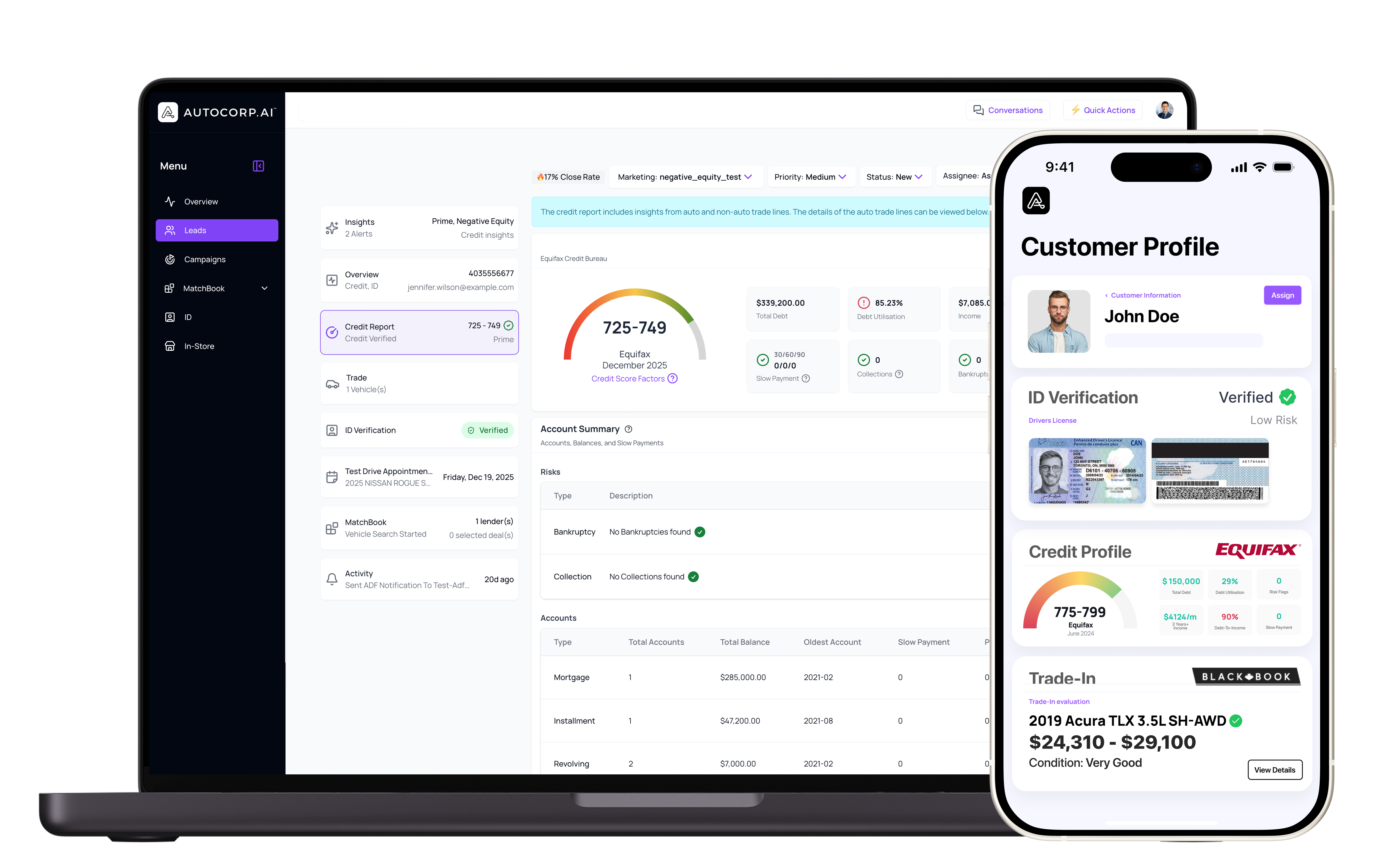
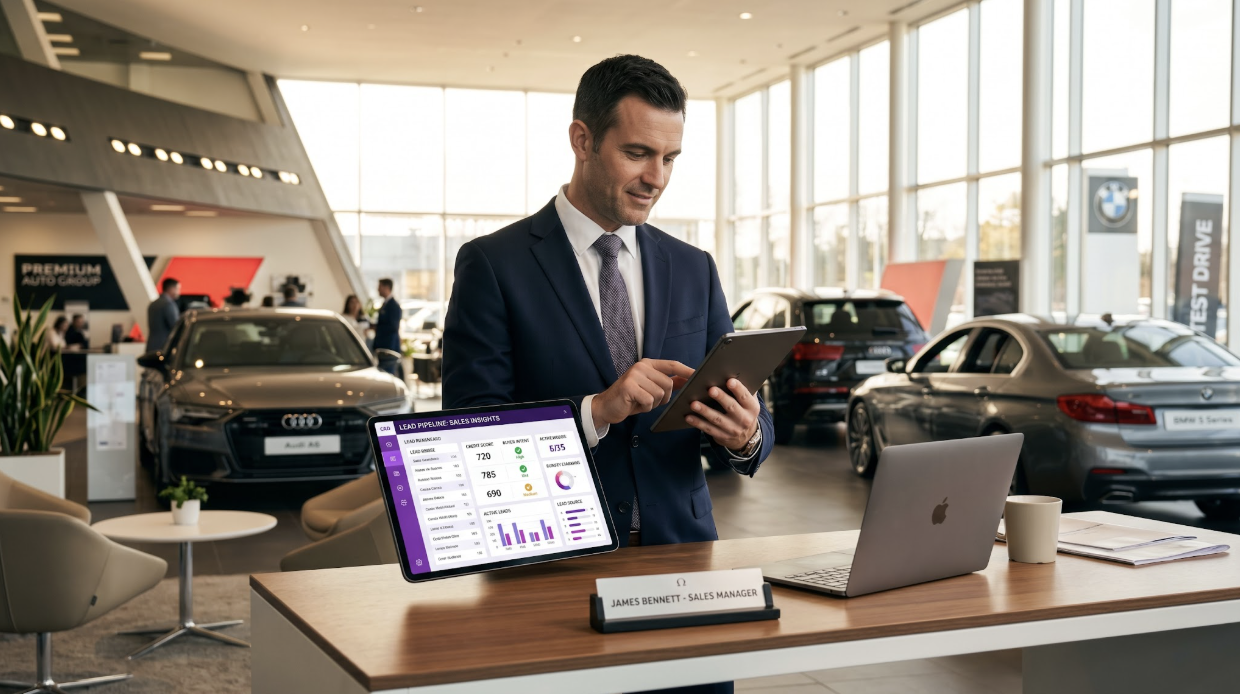
AI also enhances lead management. Intelligent lead scoring helps sales teams prioritize prospects who are most likely to buy, based on real-time activity and historical patterns. Instead of chasing every lead equally, teams can focus their time where it matters most.
Virtual assistants and AI chat tools also play a growing role. These tools engage shoppers around the clock, answer common questions, capture lead details, and schedule appointments. The result is faster response times and fewer missed opportunities, even outside business hours.
AI is transforming fixed operations just as much as sales.
Predictive maintenance uses vehicle data, telematics, and service history to anticipate issues before they become problems. This allows service departments to proactively recommend maintenance, improving customer satisfaction while increasing retention.
Virtual diagnostics are also gaining traction. Customers can describe issues or share images or videos, allowing AI-powered systems to assist with preliminary diagnosis. This reduces friction in the service process and helps advisors prepare before the vehicle arrives.
AI also improves parts inventory management. By analyzing repair trends, seasonal patterns, and vehicle populations, AI tools can forecast demand more accurately. Dealerships can keep the right parts in stock without tying up capital in overstocked inventory.
AI helps dealerships create smoother, more personalized experiences both online and in-store.
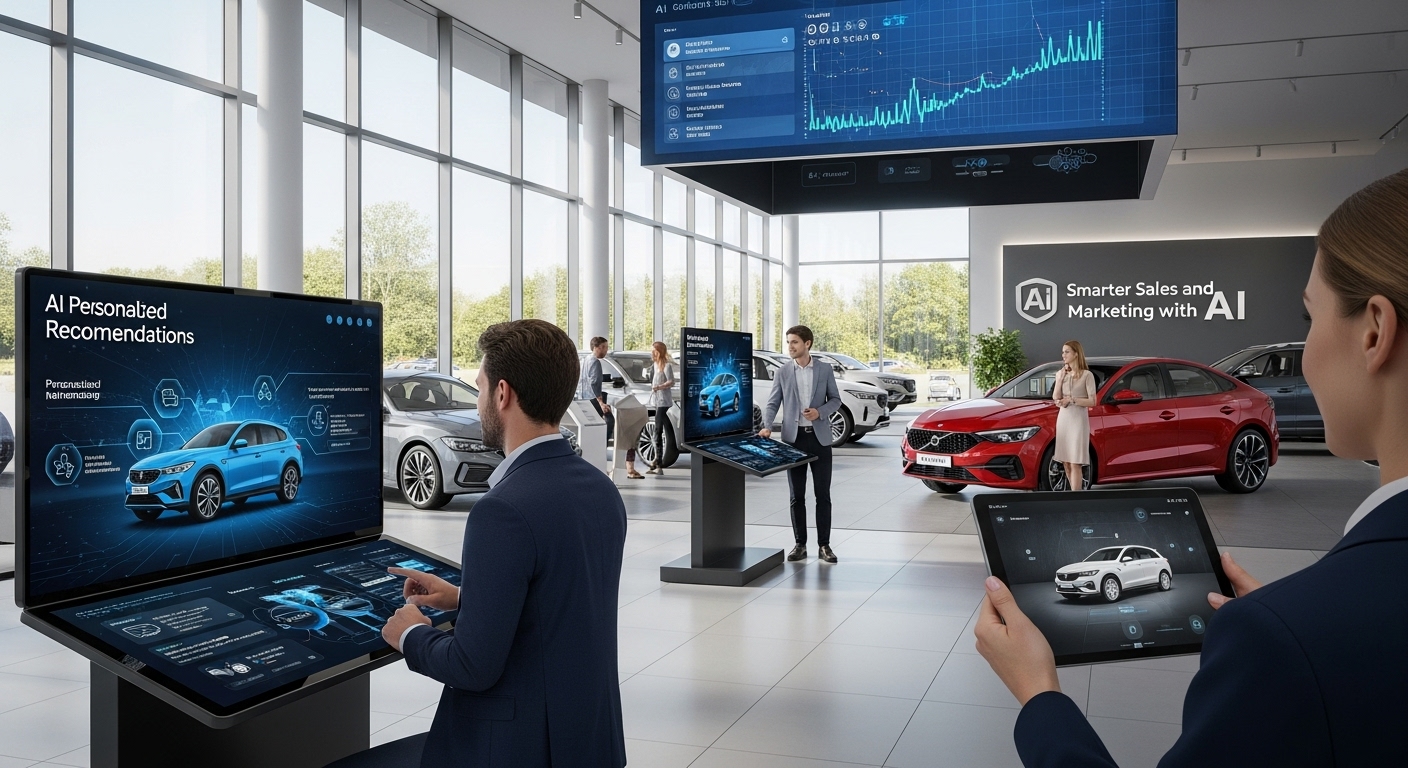
Virtual and augmented reality tools allow shoppers to explore vehicle features, trims, and options even when inventory is limited. This is especially valuable in showrooms where customers want to visualize different configurations quickly.
AI-driven recommendation engines analyze customer preferences, driving habits, and budget considerations to suggest vehicles that fit their lifestyle. This saves time for both the buyer and the salesperson and builds trust through relevance.
AI also helps bridge the gap between online and in-person experiences. Customers can begin their journey online, explore payments, trade values, or credit options, and then continue seamlessly at the dealership. Tools like AVA™ Credit support this flow by helping customers understand financing early in the process, reducing uncertainty and improving showroom efficiency.
Beyond customer-facing applications, AI improves internal dealership operations.
Fraud detection tools monitor transactions, documentation, and behaviour patterns to flag risks early. This is especially important as digital transactions become more common.
AI also helps optimize workloads. From scheduling service appointments to assigning technicians and routing customer inquiries, AI ensures resources are used efficiently and bottlenecks are reduced.
Dynamic pricing models are another key benefit. AI can analyze market trends, competitor pricing, inventory age, and demand to recommend pricing strategies that balance competitiveness and profitability in real time.
Dealerships do not need to adopt everything at once. A focused approach works best.
Start with one area such as lead management, digital retail, or service scheduling. Build from there as teams become comfortable using AI-powered insights.
Strong data practices are essential. AI systems rely on clean, accurate data to deliver meaningful results.
Training is just as important as technology. Teams need to understand how to interpret insights and apply them in daily workflows.
Partnering with automotive-focused AI providers can also speed up adoption and reduce complexity.
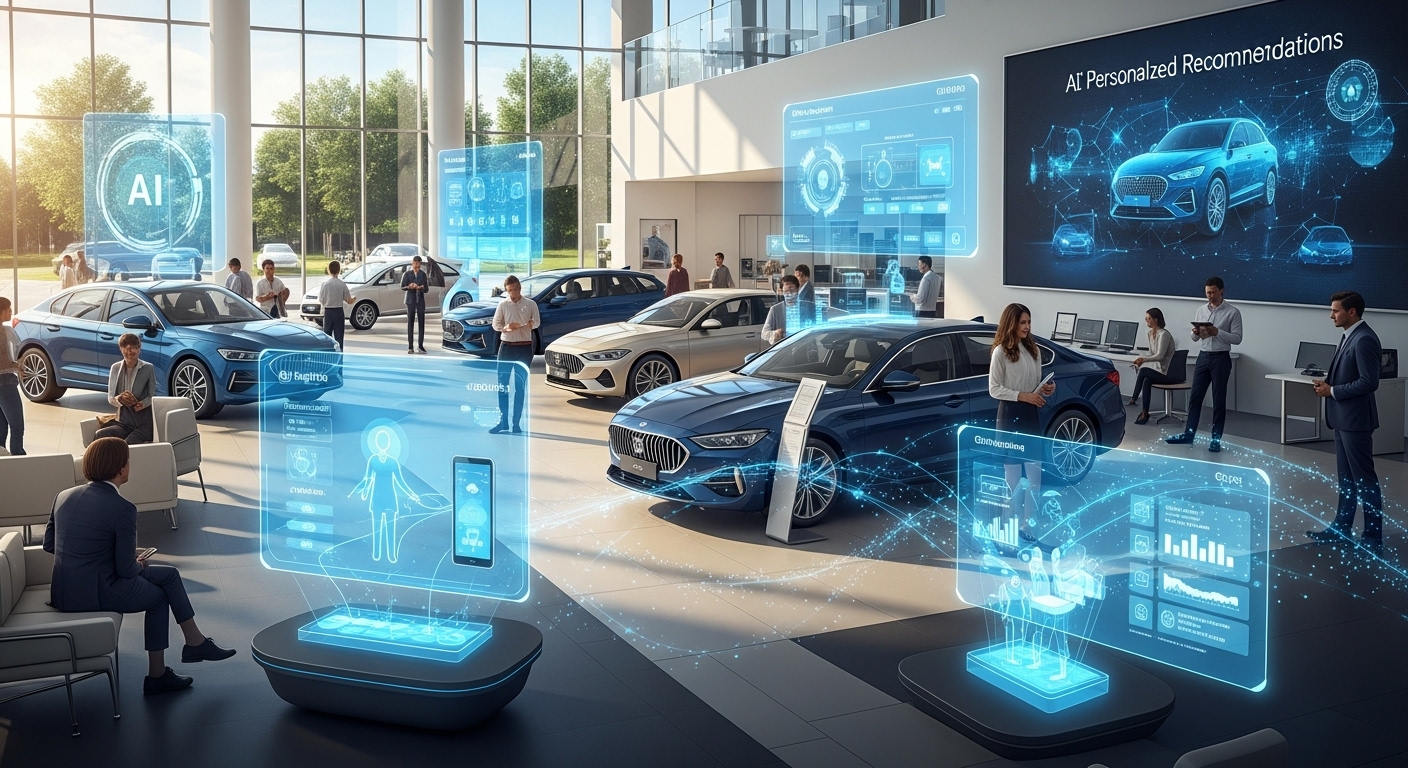
AI helps dealerships market, sell, and service vehicles more efficiently. It can analyze shopper behavior to personalize offers, score leads so reps focus on the best prospects, and use chat tools to answer questions and book appointments at any time.
AI can score leads based on real-time activity and past patterns, so sales teams prioritize people most likely to buy. This reduces time spent on low-intent leads and improves response speed through automated chat and follow-up support.
AI supports predictive maintenance by using vehicle data and service history to spot likely issues earlier. It can also help with virtual diagnostics using customer descriptions, photos, or videos, and it can forecast parts demand to reduce stockouts and over-ordering.
AI supports staff rather than replacing them. It handles repeat tasks (like first responses and data sorting) and gives teams better insights, so they can make faster decisions and spend more time with customers.
Start with one use case such as lead management, digital retail, or service scheduling, then expand. Prioritize clean data, train teams on how to use the insights in daily work, and consider vendors built for automotive workflows.
AI is not replacing dealership teams. It is enhancing their ability to work smarter, respond faster, and deliver better experiences.
Dealerships that embrace AI strategically will be better equipped to adapt to changing buyer expectations, improve profitability, and build long-term customer relationships in a rapidly evolving market.