
For years, most dealerships handled identity verification the same way.
A customer arrives for a test drive, hands over a driver’s license, and someone at the dealership takes a quick look before passing the keys across the desk.
In 2026, that process is no longer enough.
Vehicle fraud, identity theft, and synthetic identity scams have become major challenges for dealerships across North America. Criminals are using fake IDs, altered documents, stolen identities, and increasingly sophisticated fraud tactics that are difficult to detect with a simple visual inspection.
The reality is simple: manually checking a license does not verify identity.
For modern dealerships, especially in F&I, relying solely on manual ID checks creates unnecessary risk.
Automotive fraud has increased significantly over the last several years.
Fraudsters target dealerships because:
What makes this even more challenging is how realistic fraudulent IDs have become.
A fake or altered driver’s license may:
Even experienced dealership staff may struggle to identify sophisticated fraud attempts manually.
That creates serious risks during:
Most manual dealership ID checks rely on human judgment.
Typically, staff members:
The problem is that none of this confirms whether:
In busy dealership environments, these checks often happen quickly because sales staff are focused on moving the process forward.
Unfortunately, fraudsters understand this.
They rely on:
A manual check might help verify that someone physically has a license. It does not confirm that the identity itself is trustworthy.
Many dealerships still think about ID verification only in relation to test drives.
But fraud exposure extends much further into the F&I process.
A fraudulent customer can create problems such as:
By the time F&I identifies suspicious information, the dealership may have already invested hours into the deal.
In some cases, the vehicle may already be gone.
That’s why more dealerships are moving identity verification earlier in the customer journey.
Digital identity verification tools help dealerships validate identity far beyond what a manual license check can accomplish.
Instead of relying on visual inspection alone, modern ID verification systems analyze:
This creates a much stronger verification process while reducing reliance on human judgment.
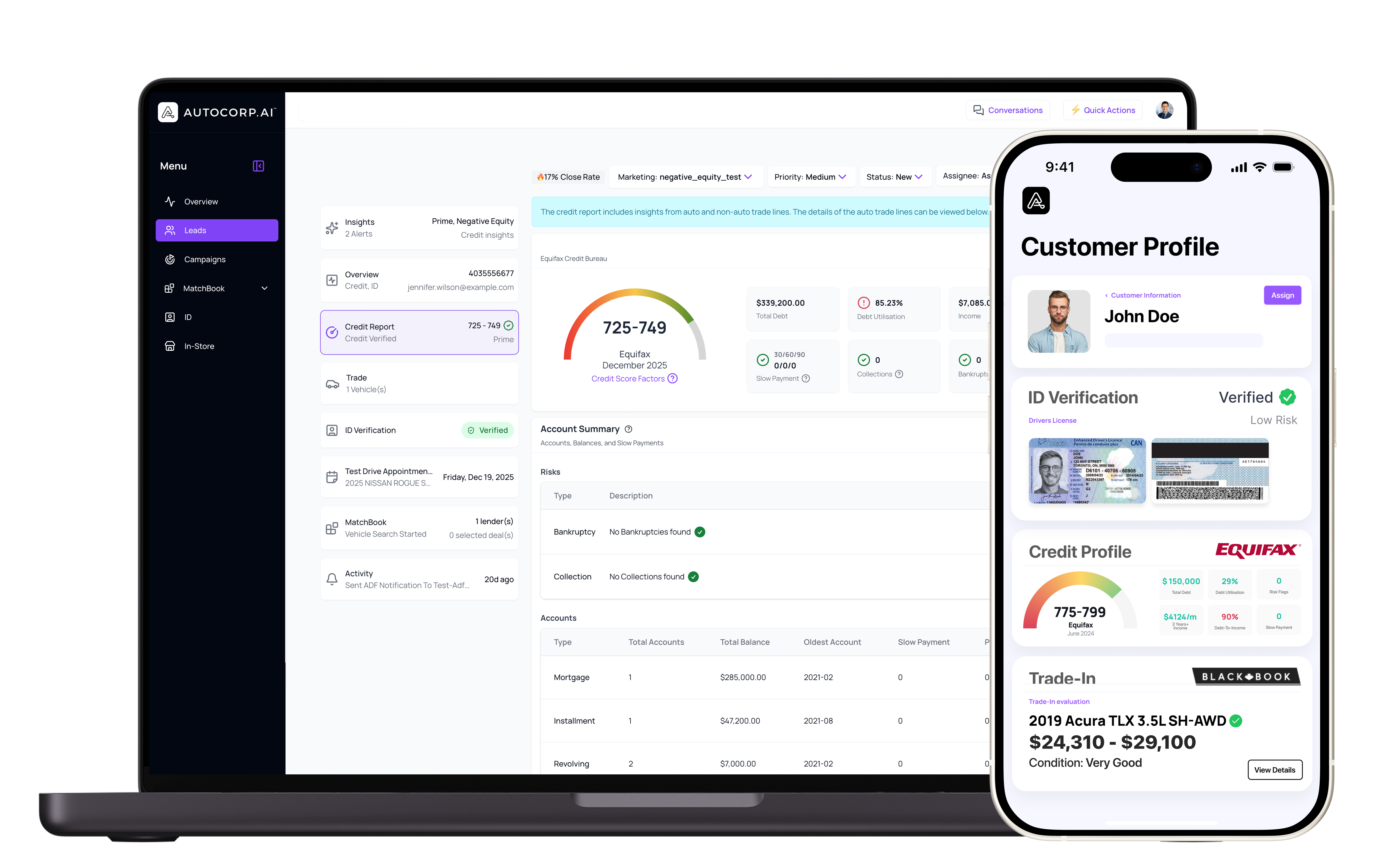
Tools like AVA™ ID help dealerships verify customer identity digitally before the deal progresses too far.
The process is simple:
This helps dealerships identify potential fraud risks before:

Identity verification is not just about security. It also improves operational efficiency.
When dealerships verify customers earlier:
It also creates a smoother experience for legitimate buyers.
Customers increasingly expect fast, digital-first processes. Modern verification tools reduce paperwork and simplify the buying journey while still protecting the dealership.
One of the biggest shifts happening in automotive retail is the move toward earlier qualification.
Dealerships no longer want to wait until the F&I office to discover:
That’s where tools like VeriDrive are starting to change the process.
VeriDrive combines:
Instead of manually checking a license and hoping for the best, dealerships can:
All before investing significant time into the sales process.
For dealerships, this creates several advantages:
Fraud prevention used to be viewed primarily as a compliance concern.
In 2026, it’s becoming a dealership performance issue.
The dealerships that operate most efficiently are the ones reducing friction while still protecting themselves from risk.
That means:
Modern dealerships are realizing that preventing fraud early also helps improve close rates, customer experience, and operational efficiency.
Manual license checks were designed for a much simpler dealership environment.
Today’s fraud risks are far more sophisticated, and relying solely on visual inspection leaves major gaps in the process.
Digital identity verification tools like AVA™ ID help dealerships verify customers more accurately, reduce fraud exposure, and improve efficiency across sales and F&I workflows.
And when identity verification is combined with early credit qualification through solutions like VeriDrive, dealerships gain a much clearer understanding of who the customer is and whether the deal is realistic before valuable time is lost.
In modern automotive retail, verifying identity properly is no longer optional. It’s part of building a faster, safer, and more efficient dealership process.