 Activix
  AutoTrader
  Black Book
  CarGurus
  Equifax
  TransUnion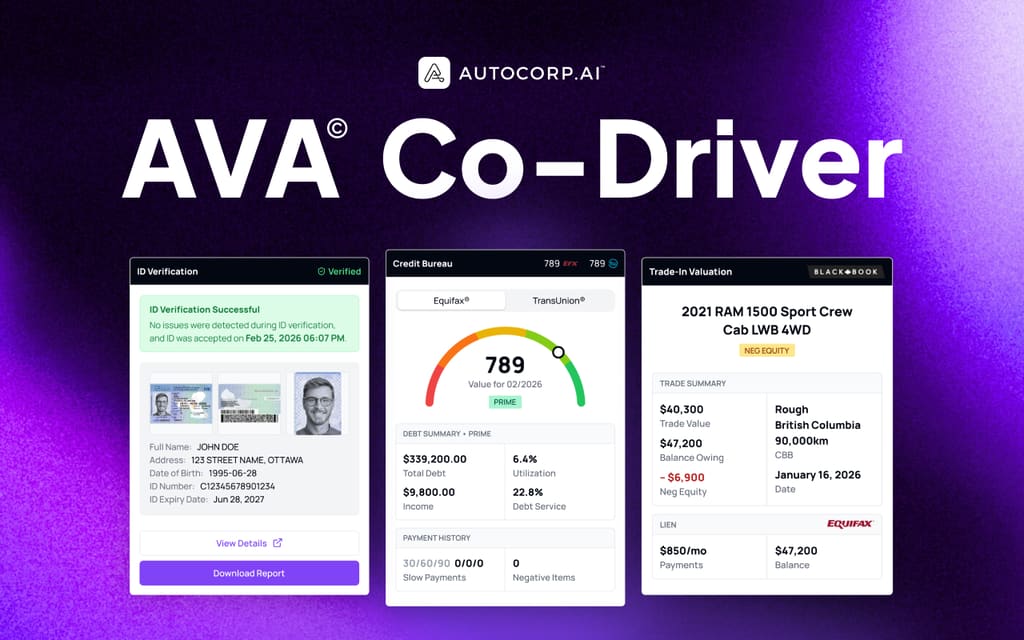


Leads arrive from multiple sources without deduplication. The same shopper submits a form on your website, clicks an SMS campaign, pings AutoTrader, and walks into the showroom the following Saturday. By Monday, three salespeople are fighting over the same prospect, each convinced the lead is theirs, and the sales manager is refereeing instead of selling cars.
That is the daily reality of most dealership CRMs. Not a tooling problem. An input problem. When the data flowing in is dirty, duplicated, and anonymous, no amount of follow-up cadence or dashboard polish will fix the close rate.
The dealerships pulling ahead are rebuilding the top of the funnel first. They are enriching every lead with credit, trade, and identity signals before it ever hits a BDC queue, then letting the CRM do what it was built for: track conversations with buyers who can actually buy.
Here are five ways to get real revenue out of your CRM, ranked by what moves the needle most.
Key Takeaways
- Credit-qualified lead prioritization beats generic follow-up cadence. Rank leads by buying power before anyone picks up the phone.
- Centralizing leads in AVA® Portal with source tracking kills duplicates and ends the daily lead-ownership arguments.
- CRM integration should push credit, trade, and ID data into the records your team already uses, not create a second system to check.
- Segmentation only works when records are enriched. Credit tier, equity position, and verified identity are the segments that convert.
- Matching lender approvals to real inventory with AVA® MatchBook turns a qualified lead into a signed deal, not another follow-up task.
1. Prioritize Credit-Qualified Leads Before Anything Else
The number one CRM opportunity at a dealership is not building a better follow-up cadence. It is deciding which leads deserve a follow-up at all.
Roughly 40% of submitted leads are unqualified. If your BDC is calling every form fill in order of arrival, your best closers are spending their first two hours of the day on tire-kickers while a prime-credit buyer with a trade sits in a queue waiting for a callback.
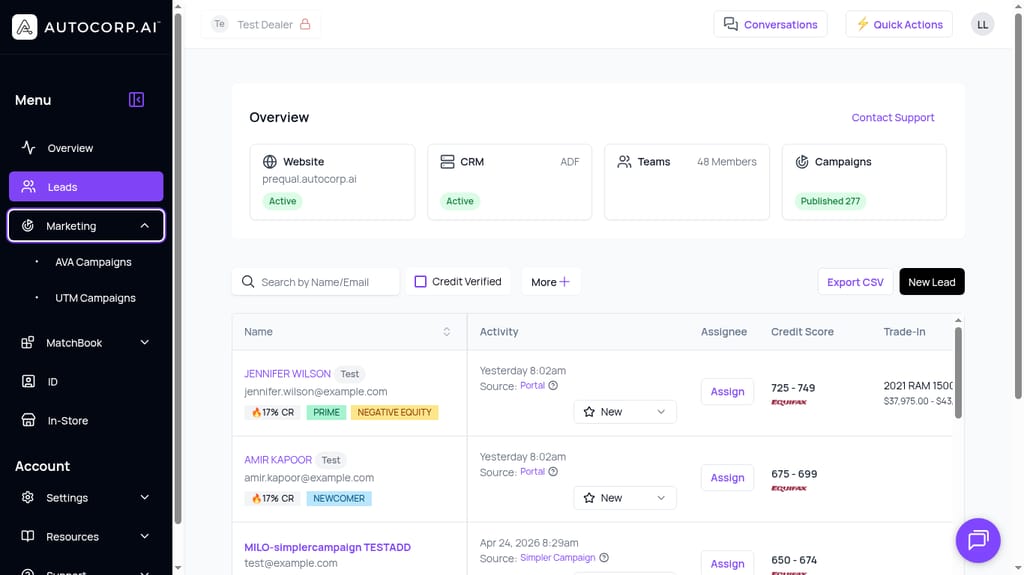
AVA® Portal attaches an Equifax soft-pull credit range, a credit tier (Prime, Near-Prime, Subprime, Newcomer), and a close-rate indicator to each lead at the moment it is captured. The lead table surfaces these as filterable columns, so a sales manager can sort by credit tier, flip on the "Credit Verified" filter, and route the top of the list to the top closers.
Credit-checked buyers are 15 to 20% more likely to buy, which is 5 to 7 times better than a typical internet lead. That is the gap between a cadence that chases volume and a cadence built around qualified buyers.
What to do this week: stop treating lead age as the primary routing signal. Rank by credit tier first, trade equity second, source third.
2. Centralize Leads With Source Tracking to End the Ownership Fights
The second-biggest CRM opportunity is upstream of the CRM itself. If your website form, your third-party lead providers, your SMS campaigns, and your walk-ins all land in different buckets, duplicates are inevitable and so are the arguments.
AVA® Portal consolidates every inbound lead into a single table with the source stamped on each row (Portal, Simpler Campaign, UTM campaign name, in-store QR check-in, and so on). When Jennifer Wilson fills out your prequal form today and clicks an SMS equity-mining campaign next week, the system recognizes her, keeps the history attached, and shows your team exactly where she came from and who owns the relationship.
A few operational benefits that show up almost immediately:
- Every lead has a visible source, so you can finally tell which campaigns produce buyers versus clicks.
- Assignment is explicit. Rows show the assignee or an "Assign" button, which ends the "I called her first" debates.
- Stage controls (New, Appointment Booked, and so on) live on the row itself, so pipeline hygiene is a two-second task, not a 20-minute data entry chore.
This is where you also catch the leads that are getting lost. Dealers running AVA® Portal typically find that 15 to 30% of their "missing" leads were actually arriving through a channel their CRM never ingested properly.
3. Enrich Your Existing CRM Instead of Replacing It
Most sales managers do not want another system. They want their current CRM (VinSolutions, Elead, DealerSocket, whatever is already deployed) to be smarter.
AVA® Portal pushes enriched lead data into your existing CRM through the ADF feed and marketplace integrations, so every record your BDC opens already includes:
- Equifax soft-pull credit range and tier
- Trade-in year, make, model, estimated value, and equity position (positive or negative)
- Verified identity status from AVA® ID
- Source attribution and campaign tags
For the people living inside desking and finance software all day, the AVA® Co-Driver Chrome extension surfaces the same AVA® customer profile directly inside the tools they already use. The finance manager pulling up a deal does not need to log in anywhere new. The credit tier, trade situation, and ID verification status appear in context, next to the deal they are structuring.
This is the integration that fixes the most common CRM complaint on the floor: "I have to check three systems to know anything about this customer."
4. Segment on Signals That Actually Predict a Sale
Segmentation campaigns fail when the underlying records are thin. "SUV owners in the 90-day service window" is a decent segment. "Prime-credit SUV owners with $4,000 in positive equity on a 2021 model year" is a segment that books appointments.
AVA® surfaces soft-pull credit, trade equity, and verified ID on every lead. Take the 60-second tour.
Book a demo →Once credit, trade, and verification data is attached to every lead, the useful segments become obvious:
- Positive-equity trade holders in a specific model year. Perfect for equity mining campaigns when your lot is short on used inventory.
- Negative-equity buyers with prime credit. These are candidates for your longer-term, higher-margin F&I conversations, not your "0% APR this weekend" blast.
- Newcomer-tier credit profiles. Route to a specialist who knows the lender appetite for thin-file applicants.
- Credit-verified, no-appointment-booked within 72 hours. Your highest-value follow-up list, period.
The AVA® Portal campaign tools (SMS campaigns, UTM campaigns, equity mining on Growth and Complete plans) are built around these segments, so you are not exporting CSVs and re-uploading them into a separate marketing tool.
5. Close the Loop: Match Approvals to Inventory With MatchBook
The final CRM opportunity is where most dealerships leak the most money. A credit-qualified lead with a verified lender approval still walks if nobody on the floor can quickly identify which units on the lot fit the approval and generate real front-end and back-end profit.
AVA® MatchBook takes a customer's lender approvals (pulled from Dealertrack and similar sources) and searches your live inventory for vehicles that fit the payment, term, and interest structure. Each result shows cash price, front-end profit, reserve, and estimated available back-end on a single row, so the salesperson can select the right unit in seconds instead of flipping between the DMS, the lender portal, and a payment calculator.
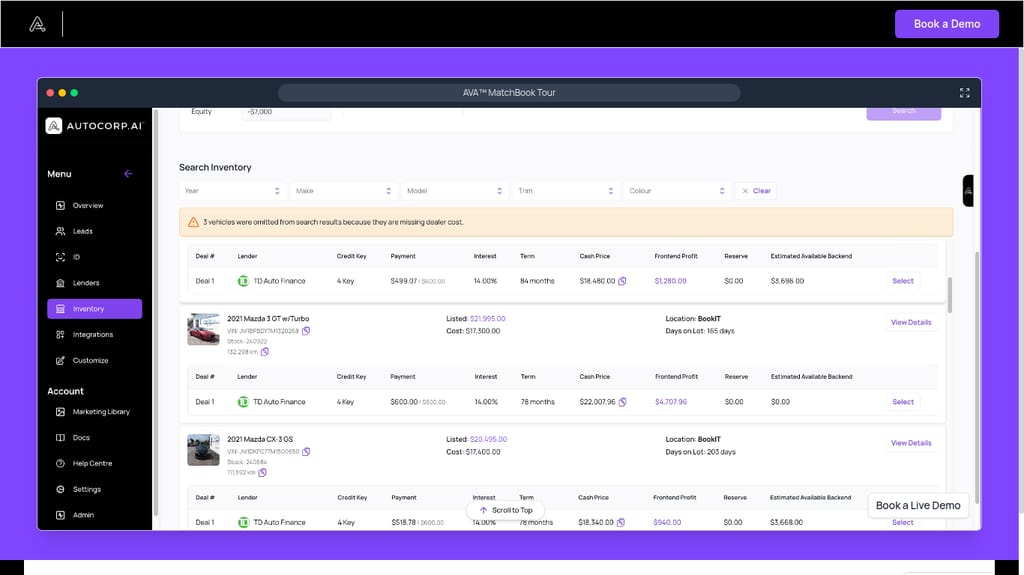
For sales managers, this changes the final conversation of the deal. Instead of "what can we get him approved on," the question becomes "which of these three profitable deals do we present first." That is the difference between a CRM that stores customer history and a CRM workflow that produces revenue.
FAQ: Maximizing CRM Opportunities at a Car Dealership
What are the best ways to maximize CRM opportunities at a car dealership?
The best way is to enrich the top of the funnel before you worry about anything downstream. Rank leads by credit tier (not lead age), centralize every inbound source into a single deduplicated view, push enriched credit and trade data into the CRM your team already uses, segment on signals that predict a sale (equity position, credit tier, verified identity), and close the loop by matching lender approvals to real inventory. Follow-up cadence matters, but it is a lever you pull on qualified leads, not raw ones.
Why is credit-qualified lead prioritization more important than follow-up cadence?
Because cadence multiplies whatever signal you start with. A tight 5-minute call-back on a lead that cannot get financed produces nothing. A 15-minute response to a prime-credit buyer with $4,000 in trade equity produces a signed deal. Credit-checked buyers are 15 to 20% more likely to buy than a typical internet lead, so sorting your queue by credit tier before you build your cadence is the single highest-leverage change most dealerships can make.
How does AVA® Portal reduce duplicate leads and ownership disputes?
AVA® Portal ingests leads from your prequal website, SMS and UTM campaigns, in-store QR check-ins, and marketplace integrations into one lead table. Each row carries the source, the assignee (or an "Assign" button if the lead is unclaimed), the credit tier, and the current stage. When a shopper comes in through multiple channels, the record consolidates instead of forking, which removes the "I had her first" arguments that eat up sales manager time every week.
Do I have to replace my existing dealership CRM to get these benefits?
No. AVA® pushes enriched lead data into existing CRMs through an ADF feed and marketplace integrations, so Equifax credit ranges, Canadian Black Book trade values, equity position, and ID verification status appear inside the CRM record your team already opens. The AVA® Co-Driver Chrome extension also surfaces the same customer profile inside desking and finance software, so F&I managers see credit and ID context in context, without a second login.
What CRM segments actually drive dealership revenue?
The segments that convert are the ones built on enriched signals: positive-equity trade holders in specific model years, prime-credit buyers with a trade older than 36 months, negative-equity buyers who still have strong credit, newcomer-tier applicants who need a specialist, and credit-verified leads with no appointment booked in the last 72 hours. Generic segments like "everyone who bought in 2022" produce opt-outs. Signal-based segments produce showroom appointments.
How does matching inventory to lender approvals improve close rates?
Most deals die in the final 20 minutes, when a qualified buyer is approved but the salesperson cannot quickly find a profitable unit that fits the approval. AVA® MatchBook pulls lender approvals and runs them against live inventory, returning each matching vehicle with payment, term, interest, cash price, front-end profit, and estimated back-end already calculated. The conversation shifts from "can we get this approved" to "which of these three profitable deals do we present first," which closes faster and protects margin.
Final Thoughts
A CRM is a scoreboard, not a strategy. The dealerships getting the most out of theirs are not the ones with the fanciest dashboards. They are the ones who fixed the inputs: credit on every lead, trade data where it exists, identity verified, source tracked, duplicates killed before the record is ever created.
Do that, and the CRM finally earns its keep. Your closers spend their day on buyers who can buy, your BDC stops arguing over ownership, and your sales manager gets to coach instead of referee.
If you want to see what credit-qualified leads look like inside your current workflow, book a demo of AVA® or compare plans to see which tier fits your store.