 Activix
  AutoTrader
  Black Book
  CarGurus
  Equifax
  TransUnion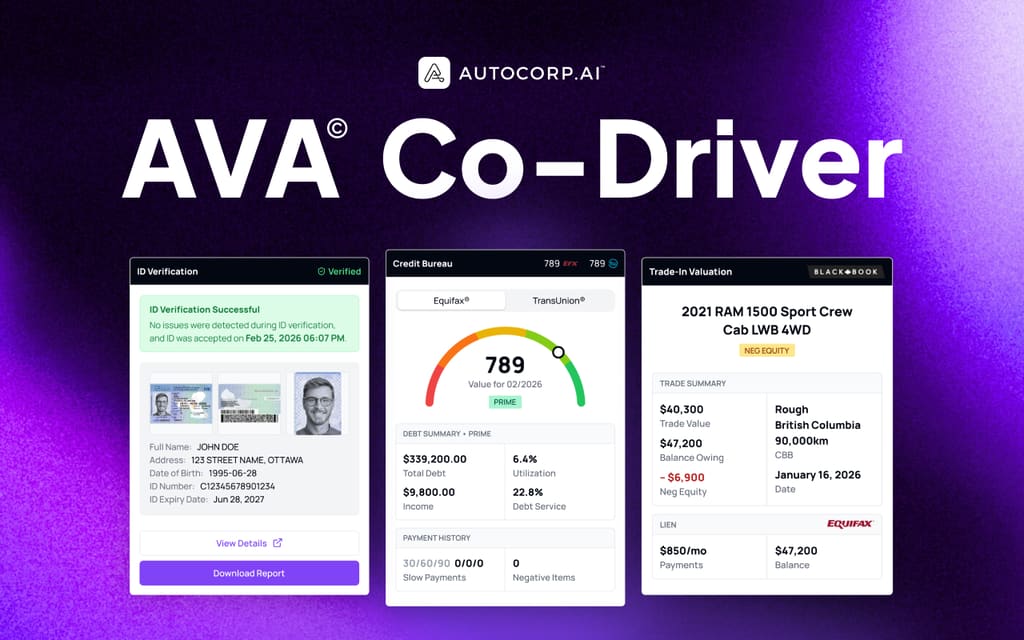




Your customer sits across the desk, phone in hand, showing you a CBB number that doesn't match your appraisal. Sound familiar?
This scenario plays out in dealerships across Canada every day. And it happens because Canadian Black Book value and market value are not the same thing, but explaining that difference clearly, quickly, and confidently is what separates a smooth deal from a stalled one. For dealers, understanding both numbers isn't just useful, it's a competitive advantage.
Key Takeaways
- Canadian Black Book (CBB) value is a standardized benchmark built from Canadian vehicle transaction data, it helps keep appraisals consistent and defensible.
- Market value is what buyers will pay right now in your local area, it changes faster than CBB and reflects current demand and supply.
- CBB supports financing and appraisal conversations because lenders and insurers use it as a common reference point.
- Market value helps you price and appraise for speed and profit, because it reflects seasonality, local inventory, and buyer behavior.
- The best trade in appraisals use both, CBB sets a baseline and market value guides the final adjustment.
What Is Canadian Black Book Value?
Canadian Black Book (CBB) is an independent data company that tracks vehicle transactions across Canada, wholesale auctions, dealer sales, private transactions, and uses that data to produce standardized vehicle valuations.
CBB is the industry's common language. Lenders use it to approve financing. Insurers use it to settle claims. And dealers use it as the foundation of every trade-in appraisal. When a customer challenges your number, CBB is the credible, third-party reference that backs you up.
Canadian Black Book value is calculated based on:
- Make, model, trim, and year
- Mileage — higher kilometres generally means lower value
- Condition — CBB assumes "good" condition as a baseline
- Factory options and packages — added features can meaningfully increase value
- Regional market trends — a pickup truck in rural Alberta carries a different value than one in downtown Toronto
CBB is objective, consistent, and updated regularly. That consistency is exactly what makes it valuable in a customer-facing conversation. It removes emotion from the appraisal and gives both sides a number they can trust.

What Is Market Value?
Market value is what a buyer is actually willing to pay for a specific vehicle, right now, in your local market. It moves faster than CBB and reflects conditions on the ground today, not a rolling average.
For dealers, market value is the number that determines whether a vehicle moves quickly or sits on your lot collecting days-in-stock. It's shaped by:
- Local demand — certain models in certain regions consistently command premiums
- Seasonality — AWD vehicles spike before winter; convertibles move in summer
- Inventory levels — when supply is tight, market value climbs; when lots are full, it softens
- Vehicle history — accident records and service gaps pull real-world value down regardless of what CBB says
- Economic conditions — interest rates, inflation, and consumer confidence all influence what buyers will actually spend
AVA® tells you who's ready to buy before your team lifts a finger. See the workflow.
Book a demo →A vehicle priced purely on CBB without accounting for current market conditions can leave money on the table in a hot market, or sit unsold in a slow one. The dealers who move inventory efficiently are the ones reading both signals at once.
Using CBB and Market Value Together
The most profitable appraisals aren't based on one number, they're based on the relationship between the two.
Canadian Black Book gives you your baseline and your defence. When a customer questions your appraisal, you're not guessing, you're referencing a respected, independent standard that lenders and the broader industry rely on. That credibility matters.
Market value tells you how aggressive or conservative to be with that baseline. If a particular model is flying off lots in your region, you have room to move. If you're already sitting on three of the same vehicle, you need to adjust accordingly.
Used together, these two data points let your team appraise with confidence, price competitively, and have transparent conversations with customers that build trust rather than friction.
Giving Your Team the Right Tools
Even when your team understands the difference between CBB and market value, the challenge is execution, especially during a busy sales day when appraisals need to happen quickly and accurately.
Tools like AVA™ Trade solve this by putting real-time CBB data directly into your team's workflow. No switching between platforms, no manual lookups, no inconsistency between appraisers. Every trade-in gets evaluated against current data, quickly and consistently. For high-volume dealerships, that efficiency translates directly into better margins and faster deal cycles. It also creates a more transparent customer experience, which drives repeat business and referrals.

The Bottom Line
In 2026's used vehicle market, where inventory fluctuates, customers are better informed than ever, and margins are tight, dealerships that rely on instinct alone will struggle. The ones that thrive will be the ones combining Canandian Black Book benchmarks with real-time market intelligence and putting the right tools in front of their teams.
Know both numbers. Train your team to use them. And make every appraisal one your customer can trust.